
Echo Edger Blade Replacement
The Echo edger blade is a genuine wear part with its own number, separate from the PAS attachment parts list - and one of the few Echo parts a universal Ryobi- or Stihl-branded blade can replace, if its two key measurements match.
The Echo edger - whether it is the straight-shaft PAS attachment or an older fixed edger - does its cutting with a flat steel disc bolted to the bottom of the shaft, and that disc is a genuine wear part with its own number, separate from anything covered on the PAS attachment parts page. It dulls, chips and eventually needs replacing, and it is also one of the few Echo parts where a universal blade from another brand's aisle is a completely legitimate substitute - if you know which two measurements actually matter.
This page covers the genuine Echo blade number, the thicker star-style alternative Echo also sells, and the universal cross-reference that lets a Ryobi- or Stihl-branded blade bolt straight onto an Echo edger.
Two blade styles, one job
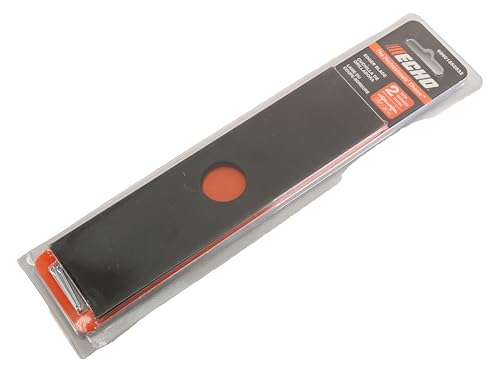
Echo sells two different edger blade designs, and they are not interchangeable in feel even though both fit the same 1 in centre hole. The standard laminated blade, genuine number 69601552632 (also listed as 69601552630 and 99909-0020), is a .090 in thick pinwheel-style disc built for everyday lawn edging in ordinary soil. The star-style blade, sold under 375-525, is a noticeably heavier gauge with a four-point ground edge, built to keep cutting through compacted soil and root-bound ground that would chip a thinner blade.
Neither is a factory-only pattern. Both are common enough that the choice comes down to what you are actually edging: routine bed maintenance in loose soil wants the standard blade, and a walk or driveway edge that has gone hard and root-bound wants the star pattern.
The genuine number and the universal cross-reference
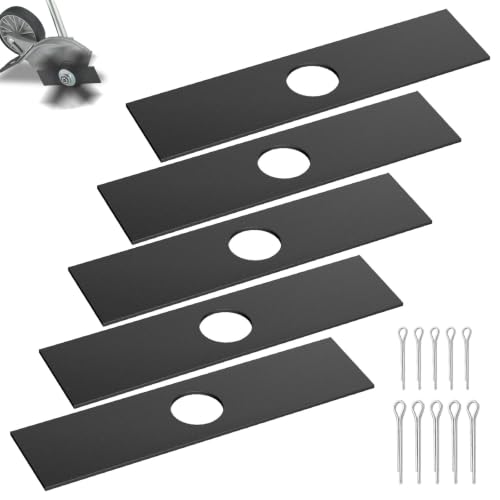
What decides whether a blade fits an Echo edger has nothing to do with the brand printed on the box. It is two measurements: an 8 in diameter and a 1 in centre hole. Echo's own listings state these dimensions rather than a proprietary shape, which is why the exact same blade is sold under several other brands' part numbers without anyone changing the steel:
| Brand / number | Fits Echo? |
|---|---|
| Echo/Shindaiwa 69601552632 | Genuine, standard laminated blade |
| Ryobi 720-237-001 / 613223 | Yes - same 8 in, 1 in centre hole |
| Stihl 4133-713-4101 | Yes - same dimensions |
| Maruyama 216062 | Yes - same dimensions |
| Green Machine 237001 | Yes - same dimensions |
This is one of the few places on an Echo where buying by brand name is actively unhelpful - a listing titled for Ryobi or Stihl that states an 8 in diameter and a 1 in bore is the same part as the Echo-branded one, usually for less.
Popular options on Amazon
Prices change often - check the current price on Amazon.

Genuine vs universal - what actually differs
If the dimensions are identical, what does the genuine number buy you? Mostly steel quality and edge retention. Echo's own 69601552632 holds an edge a little longer under repeated hard soil and is balanced to the same tolerance as the attachment it ships with. The universal multi-packs sold under the Ryobi and Stihl cross-numbers are made to the same measurements but vary more between manufacturers - some run a noticeably harder blade that stays sharp longer, others are softer and cheaper by the pack. For most homeowners doing a few beds a season, a universal multi-pack is the better value simply because a spare is already on the shelf when the first one dulls.
What you should never mix up is the two thicknesses - a star blade bolted where a standard blade was does not automatically improve the cut and can sit slightly differently on the shaft washer. Match the replacement to what came off, not to whichever is on sale.
When to replace, not sharpen
An edger blade can be resharpened a few times before it is worth retiring; a file or bench grinder restores the edge as long as the disc itself is still flat and the centre hole has not worn oval. Replace rather than sharpen once any of these show up: a visibly bent blade that wobbles when spun by hand, a chipped tooth on the star pattern that catches rather than shears, or a centre hole worn enough to let the blade wander on the shaft. A wandering blade vibrates hard enough to loosen the retaining nut, which is a more common cause of a blade coming loose mid-job than the nut itself failing.
Frequently Asked Questions
What is the part number for the Echo edger blade?
Can I use a Ryobi or Stihl edger blade on my Echo?
What is a star edger blade and do I need one?
How often should I replace an Echo edger blade?
Does the Echo PAS edger attachment use the same blade as a fixed Echo edger?
Ready to check the latest price?
Check Echo Edger Blades on Amazon