
Echo Trimmer Line: Sizes and Which One to Run
Trimmer line is the cheapest thing on the machine and the part that decides most of how it cuts. Diameter, profile and how fresh the spool is matter more than which brand is on the box - and running the wrong diameter is one of the few maintenance mistakes that costs you a clutch rather than an afternoon.
This page covers what Echo sells, what the profiles do, and how to pick without guessing.
The two Echo lines and their numbers
| Line | Echo number | What it is |
|---|---|---|
| Trimmer line, .095 in | 330095071 | Twisted profile with square edges. Echo lists it for residential through commercial work, medium to heavy weeds. Sold in long spools - one listing runs 1,394 ft |
| Black Diamond, .105 in | 330105073 | Spiral-textured square line, 3 lb spool. The texture is claimed to improve wear resistance; the squared shape gives four cutting corners |
Echo's own copy on the Black Diamond spool notes it works with most gas or cordless trimmers that take .095 in line - a reminder that the printed diameter and what a head will actually accept are not always the same conversation.
Round, twisted, square: what the profile changes
Round line is the default and the most forgiving. It has no cutting edge, so it works by impact - fine for soft grass, slow through anything woody, and quietest of the three.
Twisted line, like Echo's .095, adds square edges along a spiral. Echo's stated case for it is lower noise and less vibration than a straight square profile while keeping the cutting edge. In practice it is the sensible all-round choice for a machine that sees mixed work.
Square line, including Black Diamond, is the aggressive option: four sharp corners that cut rather than tear. It goes through heavy weeds noticeably faster and it wears the head faster too, because those same corners chew at the eyelet on the way out.
Black Diamond is Echo's square-twisted line, and its part numbers encode both the diameter and the spool size - the full breakdown of which Echo Black Diamond line number is which is worth reading before you order.
If line keeps breaking at the eyelet rather than at the tip, the profile is not the problem - see trimmer heads.
Popular options on Amazon
Prices change often - check the current price on Amazon.


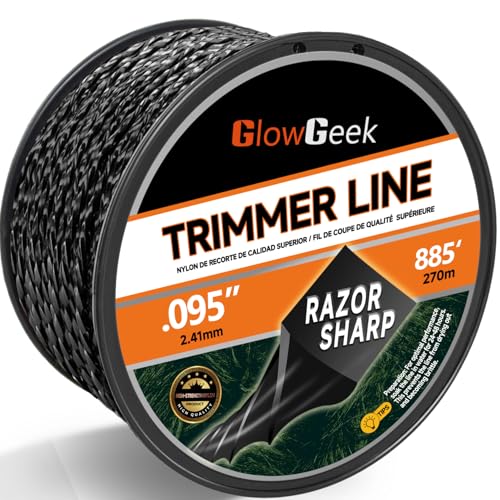


Why thicker is not automatically better
Heavier line looks like a free upgrade and is not. Three things push back:
- The head has a rating. A head built around .095 in will bind on .105 in - the line cannot feed cleanly through eyelets sized for something thinner.
- The engine has a limit. Thicker line has more drag through grass. On a small-displacement trimmer that shows up as bogging at full line length, and the machine spends its life on the edge of stalling.
- Run time falls. More drag is more fuel, and on cordless machines the effect on battery life is dramatic.
The right answer is the diameter your head and engine were designed around, in the toughest profile they will feed cleanly. Going up a size to solve a cutting problem usually means the line is old rather than too thin.
Once the diameter is settled, the other half of the job is winding it in without a jam - see how to load line in an Echo trimmer head.
Line goes off, and that is not a myth
Nylon line absorbs moisture from the air and becomes brittle. A spool that has sat in a shed for two summers snaps constantly, and every snap gets blamed on the machine. Two things help: keep the spool in a sealed container, and if a spool has clearly dried out, soaking it in water for a day before use restores a useful amount of flexibility.
The tell is where the line breaks. Breaks near the tip under load are normal wear. Breaks close to the head on light grass, repeatedly, mean either a worn eyelet or line that has gone brittle.
What size line the Echo SRM-225 takes
The SRM-225 is the model people ask about by name, and the factory answer is short: Echo builds it around .095 in line, fed by a bump head over a 17 in cutting swath. That is the diameter the eyelets and clutch were sized for, and it is the safe default no matter what the spool is labelled - trimmer line, weed eater string and gas trimmer string are all the same nylon cord.
| Line family | Diameters for the SRM-225 | What it changes |
|---|---|---|
| Cross-Fire (factory) | .095 in as shipped | Round impact line, the diameter the head is rated for |
| Black Diamond | .095-.105 in | Square profile, cuts heavier growth faster; stay at .095 in to match the head |
| Silentwist | .080-.105 in | Twisted line, quieter for lighter work |
The recurring .095 vs .105 question comes down to the same trade-off: .105 in carries more mass and cutting corners so it powers through woody stems faster, but it drags harder and wears the eyelet quicker. On a 21.2 cc trimmer like the SRM-225 the .095 in factory size is the honest match; .105 in makes sense only if you are constantly in heavy brush and accept the shorter head life.
Going past .105 in on this machine is the same thicker-is-better trap covered above: the small engine bogs at full line length and the head binds on cord it was never sized to feed. If it is struggling on .095 in, the line is almost always old rather than too thin. The full parts breakdown for this model lives on the SRM-225 parts page.
For the diameter every other Echo model runs - SRM-210, SRM-230, GT-225 and the 25.4 cc machines - see the full Echo trimmer line size chart by model.
When grass gives way to woody brush, line stops being the answer and a steel blade takes over - the Echo brush cutter and clearing saw parts page explains which blade and arbor your machine needs.
Weed eater string, gas trimmer string, trimmer line: same part, different name
Echo's own paperwork says "trimmer line," but a lot of buyers search for a weed eater string, a weed wacker string, or a gas trimmer string - all four terms describe the identical nylon cord sold under numbers like 330095071 (.095 in) and 330105073 (Black Diamond .105 in). The name changes with the region and the generation of the machine; the part does not.
That matters when a listing calls itself "weed eater string" rather than "trimmer line" and you are trying to match it against the numbers above - check the diameter and profile printed on the spool, not the label on the box. A .095 in twisted "string trimmer string" and a .095 in Echo "trimmer line" are the same spool sold under two names.
The same goes for the square-profile line: shoppers search "echo black diamond weed eater string" almost as often as "black diamond trimmer line" - it is the same spool covered on the Black Diamond line page.
Once the diameter and profile are settled, the only thing left is getting the new string onto the spool without a jam - that procedure lives on how to load line in an Echo trimmer head rather than here.
Frequently Asked Questions
What size trimmer line does an Echo use?
What is Echo Black Diamond line?
Is square trimmer line better than round?
Why does my trimmer line keep breaking?
What size line does the Echo SRM-225 take?
Is weed eater string the same thing as Echo trimmer line?
How do I replace the weed eater string on my Echo trimmer?
Ready to check the latest price?
Check Echo Trimmer Line on Amazon